You can’t always be at home at a specific time to receive a delivery, which is why there are alternative solutions that offer convenience and flexibility when collecting your parcels. Take a look at this comparison: Parcel Locker vs. Convenience Point. Each option has its own advantages and disadvantages. Discover them to understand which one suits your needs best at any given moment.
Parcel Lockers (smart lockers): total autonomy
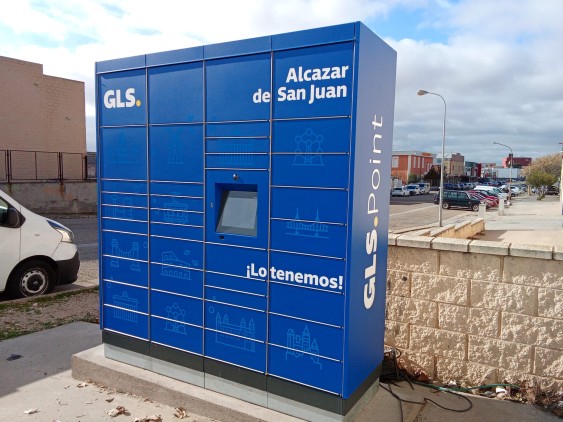
Parcel Lockers are smart lockers that allow parcel collection using a PIN or QR code. Some are available 24/7, and most offer extended opening hours to make it easier to collect your parcel whenever it suits you best.
Advantages: 24/7 availability and contactless collection
A locker is a secure storage solution that allows you to collect your deliveries easily from accessible locations such as shopping centres or petrol stations. What are the main advantages compared to home delivery?
- They are not dependent on schedules: the vast majority are available 24 hours a day, 7 days a week, so you decide when to collect your parcel within the seven days after it has been deposited in the Parcel Locker.
- Fast and secure collection: you only need a PIN to collect your orders without waiting, and as this code is personalised, you can rest assured that your parcel will remain secure until you pick it up.
- Avoid failed deliveries: parcel collection does not depend on you being at home at a specific time, also preventing the courier from having to make another delivery attempt.
- Sustainability: walking is the most common way to collect a parcel, with 65.2% of people walking to convenience points and 54.9% to smart lockers.
- Contactless: you avoid interacting with store staff; you simply go to the Parcel Locker, enter your PIN on the screen, and collect your parcel.
- No queues: there is no waiting time — you arrive, collect your parcel quickly, and leave. At a Parcel Shop, there may sometimes be queues.
Disadvantages: parcel size limitations
The main disadvantage of a locker is its capacity. Parcel Lockers do not accept parcels longer than 70 cm on their longest side or exceeding 110 cm in the sum of all dimensions. This means there are limitations for large parcels.
Convenience Points (local shops): the human touch
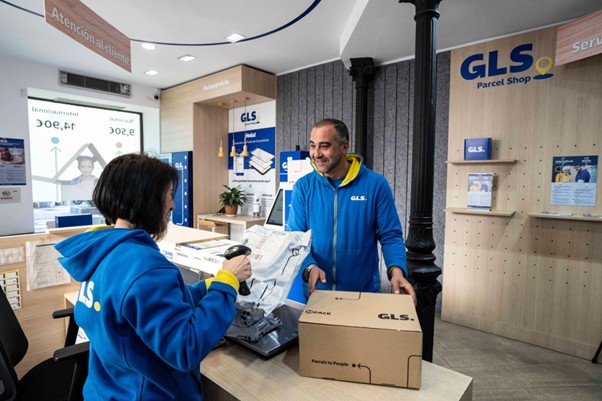
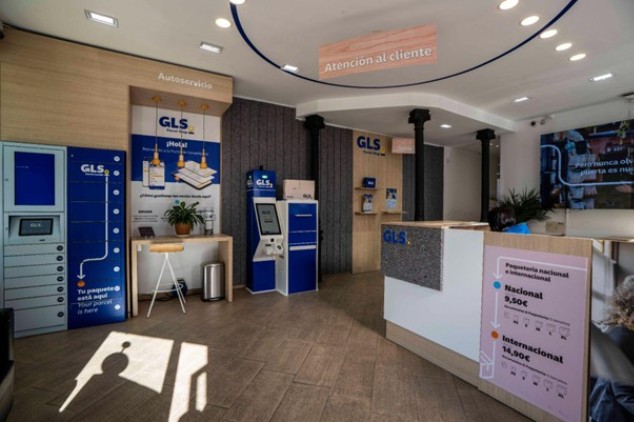
Convenience Points are partner stores that manage parcel deliveries and returns. At GLS, we work with Parcel Shops or local stores that offer direct and personalised service when collecting your parcels.
Advantages: medium-sized parcel collection and personalised service
In addition to convenience, security, and avoiding failed deliveries, a convenience point offers several advantages compared to home delivery and Parcel Lockers:
- Flexible opening hours: these stores usually have extended opening hours, giving you flexibility to collect your parcel whenever it suits you best.
- Proximity: GLS has an extensive network of Parcel Shops, allowing you to select the convenience point closest to your home or workplace, making parcel collection more accessible.
- Greater capacity: they offer more storage space, giving you access to both small and medium-sized parcels.
- Personalised service: at a convenience point, you receive direct and friendly customer service that improves your overall experience.
- Support for local businesses: visiting a nearby local shop also gives you the opportunity to make any purchases you may have pending.
Disadvantages: subject to business opening hours
Although convenience points generally offer long opening hours, when comparing Parcel Locker vs. Convenience Point, the latter has greater limitations because it depends on the opening hours of the local shop in question. In contrast, lockers are available 24 hours a day, 7 days a week, except when located inside shopping centres or facilities that may not be accessible overnight.
Comparison: privacy, opening hours, and location
With everything we have covered so far about lockers vs. convenience points, it is easier to compare their advantages and disadvantages in the following comparison:
Parcel Locker / Convenience Point
Privacy Total / Direct contact
Schedule
Opening hours 24/7 (most of them) / Subject to business hours
Location
Accessible / Locations Nearby
Limitations
Parcel size / Opening hours
Security
PIN access / Stored securely in a local shop
In addition to these differences, both options have in common that they help reduce failed deliveries, are more sustainable than home delivery, and offer convenience, speed, and flexibility when collecting a parcel.
Which should you choose: Parcel Locker or Convenience Point?
The best option depends on your parcel and your needs at any given time:
- You will choose a convenience point if you are looking for personalised service, a nearby collection point, or when you need to collect a parcel whose total dimensions do not exceed 150 cm and whose maximum weight is 30 kg. It is also the best option when you need a returns service, as this usually includes both parcel collection and returns in a convenient and fast way if you are not satisfied with your order.
- You will choose a locker if you want fast, queue-free parcel collection with extended opening hours that offer greater flexibility. It is ideal if your working hours, lifestyle, or habits prevent you from visiting a local shop during business hours.
Both Parcel Lockers and Convenience Points are alternatives to home delivery that more and more people are choosing because of their convenience and flexibility, without compromising security. The main reason is that they give you control and autonomy when collecting your orders, without depending on being at home at a specific time.